
6 Reasons why your business needs to change to a VoIP phone System

Voice over Internet Protocol (VoIP) is a telecommunication system that allows voice communications, along with several other multimedia solutions, all to be conducted over the internet. As long as your internet strength and bandwidth are good, then VoIP is certainly the future in your business telecommunications.
We have listed 6 excellent reasons why you should change to VoIP without delay.
- BT ISDN Switch Off
Announced in 2015, we are now hurtling toward the conclusion of BT switching off all ISDN lines and leaving businesses without a choice but to consider cloud-based solutions, including VoIP.
Whilst the deadline is 2025, many areas are increasingly being added to the stop-sell list meaning that supplies, support and equipment for ISDN is in decline. So, if you are in one of the areas already on stop, moving to VoIP should be that imperative move for your business operations.
2. VoIP is an all-in-one system
With a multiple of capabilities, VoIP offers:
- Calls
- Video Conferencing
- Call waiting, call forwarding, call blocking, call transfer, return call#
- Text
- Access to voicemail via email
- All team members using the same number
- Flexible solutions for today’s flexible workforce
3. It can work on an existing system
Your current phone system will be easily adaptable to a new VoIP network as it very likely has digital capabilities. Even if you have a PBX system moving to VoIP will be incredibly easy, so there will need no need to invest in alternative infrastructure.

4. VoIP is easy to manage and maintain
Voice information and data are used on the same system with VoIP making it a more cohesive system that works seamlessly. VoIP allows users access to all communications needs including video conferencing, computer comms, telephone-based comms, all at the click of a button. As it’s also an agile solution it supports remote working, meaning you are appearing to be phoning from the office, regardless of your location. And as the VoIP network can adjust itself to assist the user better, this helps with desk moves making office changes so much easier. It also aids with reduction in IT issues, freeing up those teams to focus on what they do best.
5. Enhanced Network Management
Your IT teams will be able to manage every bit of data that travels across the WAN or LAN network. Issues are therefore easily located and fixed quickly which enhances the operational capability of a busy office. VoIP even helps you detect issues and make changes to the way your network is set up which means no longer will small problems become a bigger issue for you.
6. Cost Savings
Moving away from an old telephone-based system on to the internet supports your digital transformation. Your telecommunications bills will become cheaper and less resources are used daily to support any legacy systems.
With the ability to move to the cloud with VoIP, will also support a huge reduction to your overall IT costs.
VoIP is the gateway to a more flexible telecommunications solution that bridges the divide between on-premise and cloud.
Would you like a free assessment on your communications solutions?
Contact us now.

Subsribe for updates and our latest research
You may be interested in

From AI Experimentation to Real Business Outcomes: Our Takeaways from Microsoft Frontier Tour London
This week, Pete Graham, Microsoft Business Manager at Espria, attended Microsoft Frontier Tour London alongside members of the wider Espria team to hear directly from Microsoft leaders, partners and customers about the future of artificial intelligence. Having attended Microsoft’s AI Tour last year, Pete was interested to see how the conversation had evolved over the past 12 months. What became clear throughout the day was that the discussion around AI has matured significantly. A year ago, many organisations were still asking what AI could do. Today, the focus is increasingly on how to adopt it…
Critical PHP vulnerabilities: do you know who owns the fix?
When websites and applications sit with different teams and suppliers, the first challenge is knowing who needs to act. Critical vulnerabilities have been disclosed affecting PHP, a technology widely used across websites, web applications and other software products. The technical advice is clear: identify affected systems and apply the available updates. But for many organisations, the first challenge is understanding where PHP is being used, who manages those systems and who is responsible for taking action. To help you identify potential exposure, we have created a PHP Security Checker to determine whether your systems have…
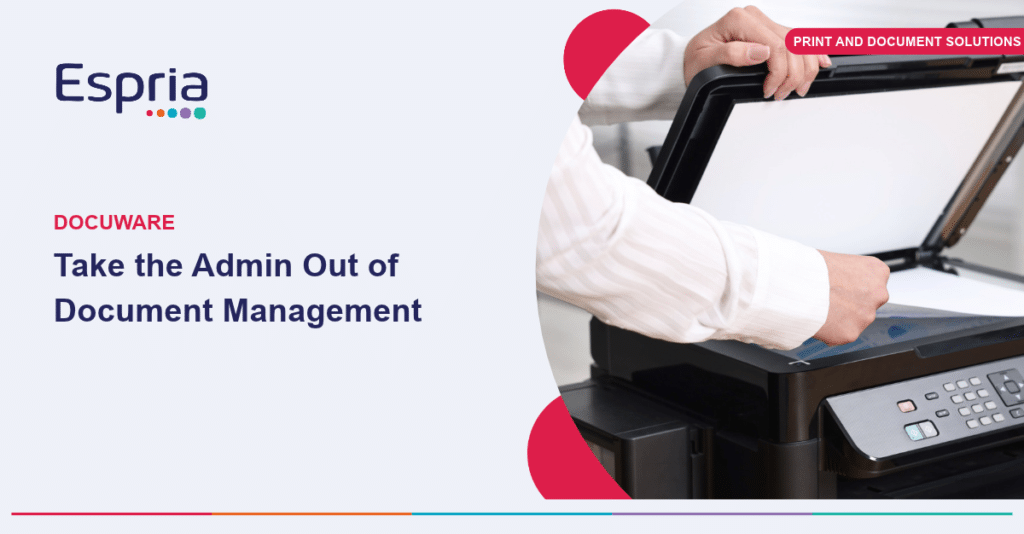
Beyond the Filing Cabinet: What Document Management Actually Saves You
Document Management for Small Offices with DocuWare For many small offices, document management still means a filing cabinet, a shared drive with inconsistent folder names, and a lot of time spent searching for the one contract or invoice somebody needs right now. DocuWare replaces that with a structured, searchable system that sits behind your everyday paperwork. What does DocuWare mean in practice? Giving Office Managers time back For an Office Manager who is often the person holding the whole administrative process together, this is time back. Fewer interruptions to find a document for a colleague,…
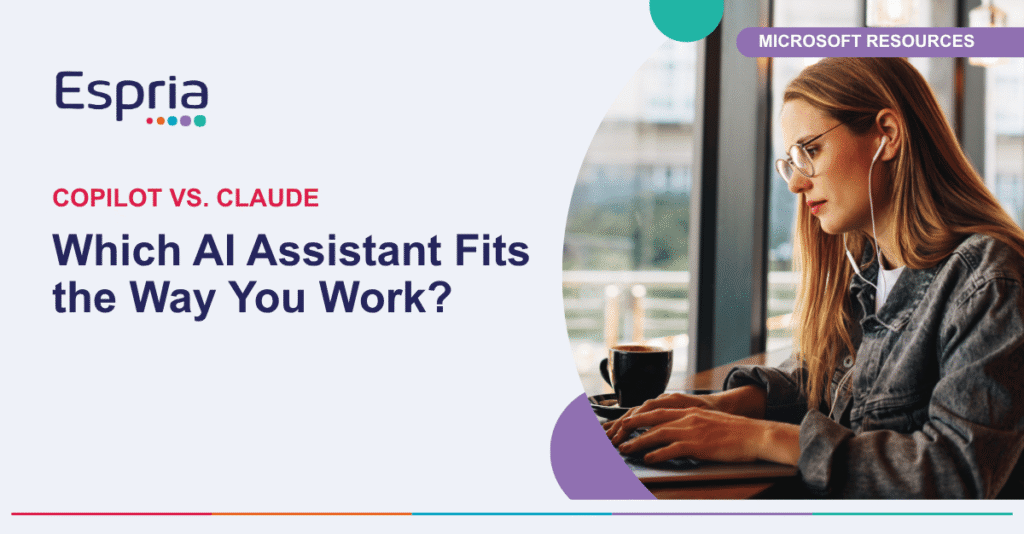
Copilot vs. Claude
Why Microsoft 365 Copilot fits every day work A plain-English guide for people trying AI at work: what Copilot does, how it differs from a separate assistant such as Claude and where to start. The short answer Claude is a separate AI workspace. Copilot sits inside the Microsoft apps many teams already use and can work with the emails, files and meetings each person is allowed to access. A separate assistant helps when: Copilot helps when: – You need help creating or developing content from scratch. – The task is focused research, reasoning or code….
Microsoft is changing Copilot billing. Here’s how to stay in control of AI costs
From 1 December 2026, new Microsoft 365 Copilot Business purchases through CSP will come with usage-based billing already configured. At first glance, that might sound like another variable cost for IT and finance teams to manage. But it also gives businesses a practical way to access the next generation of Copilot experiences while retaining control over who can use them, how much they can spend and where that money goes. This matters because Copilot is changing. New experiences such as Copilot Cowork are designed to carry out larger, multi-step pieces of work. That creates more…

Phishing just got personal
AI-powered phishing attacks are becoming harder to detect, with increasingly sophisticated emails bypassing traditional security controls. As a result, organisations are placing greater focus on Human Risk Management, recognising employee behaviour as a measurable cybersecurity risk. SecureLearn, powered by KnowBe4 and fully managed by Espria, helps businesses reduce human risk through continuous security awareness training, phishing simulations, targeted coaching, and board-ready reporting that demonstrates improvement over time.