
Your next generation MSP.
We secure, automate and improve the technology your business depends on.

We combine great people, AI-powered automation and embedded cyber security into a single, integrated service platform - one that continuously learns, improves and evolves with your business to deliver measurably better outcomes over time.
Whether you need support for a specific project, help strengthening your security posture, or a fully managed IT environment, we tailor our services around your priorities-today and long term.
- Strengthen security, compliance and resilience across users, devices and cloud services
- Improve visibility, control and cost efficiency
- Improve performance and user experience with clear ownership and fast escalation
- Free-up internal teams to focus on strategy and growth
We take complexity out of IT - keeping your people productive and your organisation protected.

Built on 30 years of experience
Thirty years extensive experience working with leading vendors, and the ISO and cyber accreditations to prove it.






Our partners


Getting more from Microsoft
From Microsoft 365 and Azure to Copilot and security tooling, we help organisations:

Optimise licences and reduce unnecessary spend


Improve adoption and productivity

Strengthen governance, security and compliance

Turn Microsoft investment into measurable value

Industry experience, tailored delivery
We support organisations where IT must be secure, reliable and ready to scale – without adding unnecessary complexity

What our customers say


"Espria managed services have been instrumental in transforming our IT infrastructure… We highly recommend Espria for their exceptional service and commitment to our ongoing business needs."
Andy Bone
Director of IT at NAHT

"Working with Espria has given greater depth and breadth to our IT strategy... we have found a partner who not only understands the needs of our business, but who also works with us to develop future growth plans... I can see our business relationship extending far beyond the current contract scope"
Nigel Keen
IT Manager, Vercity

"You have been very clear on all the services that you offer and made me feel at ease on issues that my company may have concerns with... so far have we been very pleased with the services Espria have been supplying my company with"
Sonia Johal
Manager, JJ Estates Limited

"Edmond Shipway and Espria have a long and well-established partnership... they were able to offer solutions that would not only meet our needs but our budget requirements. Both Consultants were extremely knowledgeable and prompt to answer any queries. Feedback from the business has also been very good!"
Adam Fyfe
IT Manager, Edmond Shipway
"We were running an ageing on-premise environment with Citrix and knew we needed to replace with a more fit for purpose solution, but the risk to the business of getting it wrong and the impact of a poor deployment were high — our operations depend on the right solution and more importantly a good transition to that new solution. Espria worked closely with me in order to ensure design was the right solution to meet our companies needs and then they planned and delivered the successful migration to Azure and AVD, which they now manage for us. The resilience's and functionality of this new solution is a significant improvement that can even be seen by my most basic of users. We also benefit from Espria's flexibility and customised approach to their clients allowing our small internal IT staff full visibility at all levels and supporting our close working relationship. There staff show great knowledge not only in the technology we use, but also our environment and they work closely with us to ensure they are always adapting to our company needs so they can better advise us on how to improve things."
"I also have to make a special note regarding my account manager. Unlike the typical account manager this one is really good at listening to your needs and also picking up on your patterns of communication to understand when you need assistance and when you need time. This really allows for a great working relationship that doesn't interfere with my busy BAU but instead compliments and assists."
Jessica Kerridge
Head of IT and Projects, Northern Commercials

Trusted by:











More than a helpdesk.
Human-led. Intelligently automated.
We don't just fix tickets-we design IT environments where services work together.
By aligning cloud, security, user experience and automation we help you:
- Optimise costs and licensing
- Improve reliability and performance
- Reduce operational friction
- Plan confidently for future change
This joined-up approach supports growth rather than slowing it down.
Read our latest insights
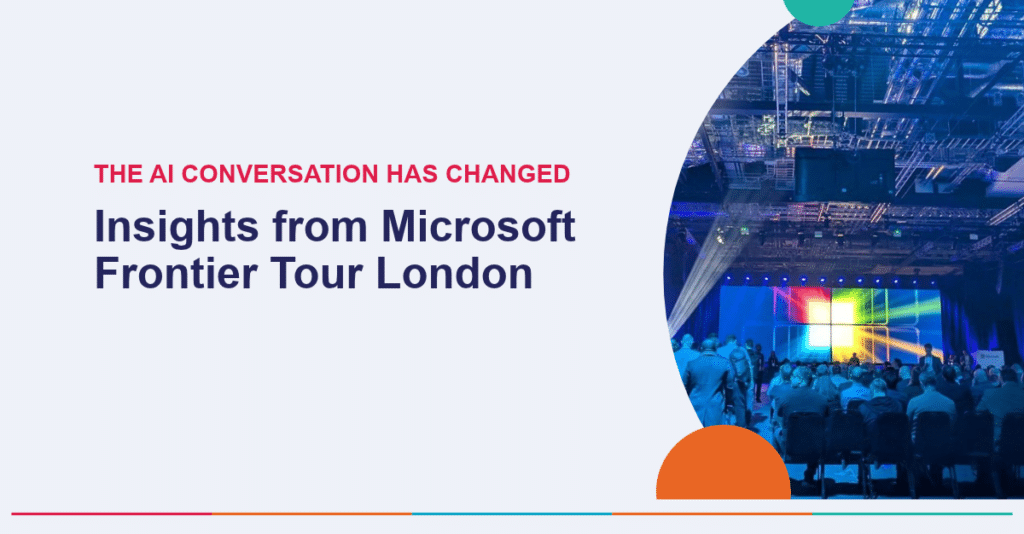
From AI Experimentation to Real Business Outcomes: Our Takeaways from Microsoft Frontier Tour London
This week, Pete Graham, Microsoft Business Manager at Espria, attended Microsoft Frontier Tour London alongside members of the wider Espria team to hear directly from Microsoft leaders, partners and customers about the future of artificial intelligence. Having attended Microsoft’s AI Tour last year, Pete was interested to see how the conversation had evolved over the past 12 months. What became clear throughout the day was that the discussion around AI has matured significantly. A year ago, many organisations were still asking what AI could do. Today, the focus is increasingly on how to adopt it…
Critical PHP vulnerabilities: do you know who owns the fix?
When websites and applications sit with different teams and suppliers, the first challenge is knowing who needs to act. Critical vulnerabilities have been disclosed affecting PHP, a technology widely used across websites, web applications and other software products. The technical advice is clear: identify affected systems and apply the available updates. But for many organisations, the first challenge is understanding where PHP is being used, who manages those systems and who is responsible for taking action. To help you identify potential exposure, we have created a PHP Security Checker to determine whether your systems have…
Beyond the Filing Cabinet: What Document Management Actually Saves You
Document Management for Small Offices with DocuWare For many small offices, document management still means a filing cabinet, a shared drive with inconsistent folder names, and a lot of time spent searching for the one contract or invoice somebody needs right now. DocuWare replaces that with a structured, searchable system that sits behind your everyday paperwork. What does DocuWare mean in practice? Giving Office Managers time back For an Office Manager who is often the person holding the whole administrative process together, this is time back. Fewer interruptions to find a document for a colleague,…
Copilot vs. Claude
Why Microsoft 365 Copilot fits every day work A plain-English guide for people trying AI at work: what Copilot does, how it differs from a separate assistant such as Claude and where to start. The short answer Claude is a separate AI workspace. Copilot sits inside the Microsoft apps many teams already use and can work with the emails, files and meetings each person is allowed to access. A separate assistant helps when: Copilot helps when: – You need help creating or developing content from scratch. – The task is focused research, reasoning or code….
Microsoft is changing Copilot billing. Here’s how to stay in control of AI costs
From 1 December 2026, new Microsoft 365 Copilot Business purchases through CSP will come with usage-based billing already configured. At first glance, that might sound like another variable cost for IT and finance teams to manage. But it also gives businesses a practical way to access the next generation of Copilot experiences while retaining control over who can use them, how much they can spend and where that money goes. This matters because Copilot is changing. New experiences such as Copilot Cowork are designed to carry out larger, multi-step pieces of work. That creates more…

Phishing just got personal
AI-powered phishing attacks are becoming harder to detect, with increasingly sophisticated emails bypassing traditional security controls. As a result, organisations are placing greater focus on Human Risk Management, recognising employee behaviour as a measurable cybersecurity risk. SecureLearn, powered by KnowBe4 and fully managed by Espria, helps businesses reduce human risk through continuous security awareness training, phishing simulations, targeted coaching, and board-ready reporting that demonstrates improvement over time.