
What are the top business priorities of 2022?

If the last few years have taught us anything, it’s anything can change, and businesses need to be reactive and proactive in preparing for any eventuality. We have had to ensure that our teams could work remotely, collaborate and be as productive as possible – and whilst this was challenging, businesses realised that it could work. After a turbulent 2021, what are the risks and challenges that businesses face in 2022? We took a look to see what we should be preparing for. Prepare for invasion, ensure your Cyber Security is robust The pandemic has created an incredible opportunity for cybercriminals. It allowed them to infiltrate businesses weaknesses as many were completely unprepared for the events that were thrust upon them when the pandemic escalated. Business leaders will need to work closer with their IT teams, as they need to be aware and prepare for attacks. Rather than reacting to attacks, they should prepare for all eventualities, but also prepare their teams for the signs of attacks from outside. The data that a company holds also needs to be considered in this process and how this is protected. Therefore, business leaders need to support their IT teams in their objectives and then support communication to their wider teams as to these objectives and policies to prevent cyber-attacks. Ensure you a digitally transforming Pre-2020, companies were beginning the transition to the cloud, but as remote and hybrid working dramatically increased during the year of the pandemic, the lack of cloud-based products within organisations was exacerbated as remote working, and consequently hybrid working, became the norm. When the economy reopened in 2021, some businesses paused their digital transformation which was a colossal mistake. “Returning to normal” really will not be normal again, as one thing is certain, a considerable amount of activity will occur online. Therefore, businesses need to transition to the cloud to be ready for organisational operational success and the next stage of e-commerce. If your business is still at the behest of hardware solutions, you need to adapt quickly to react to changing consumer demands. As a result, any transitions begun in 2020, need to be accelerated not halted in 2022. Consideration of our environment becomes imperative There has been considerable increase in news stories regarding climate change and global warming. It is now impossible for businesses to ignore warnings from experts and with visible real-world impacts occurring, people are demanding action. If your business is to continue into the future then there will need to be recognition that sustainability is no longer a buzz word, it needs to be embraced and brought into your future strategies which will need to be communicated to customers and shareholders. So, consider courses that will help develop your teams skills and help shape your sustainability plans for the future. Emergence of AI Tech It’s incredible to see how AI tech has not only been integrated into the largest and most elite of businesses, but that the effect of this technology is now seen in smaller businesses. Now we see Chatbots that support customers and keep them on your homepages longer to support marketers in identifying trends in consumer behaviour. However, in 2022 are we reaching a point where some questions need to be answered on AI? Are more and more workers going to be replaced by this tech, or are businesses going to train their teams to understand and use AI to keep them ahead of their competitors? Answers are unclear, but one thing Is for sure it will be interesting, and businesses will need to understand quite rapidly what the implications are of this evolving technology in order to prepare for this and the coming years.
Subsribe for updates and our latest research
You may be interested in

From AI Experimentation to Real Business Outcomes: Our Takeaways from Microsoft Frontier Tour London
This week, Pete Graham, Microsoft Business Manager at Espria, attended Microsoft Frontier Tour London alongside members of the wider Espria team to hear directly from Microsoft leaders, partners and customers about the future of artificial intelligence. Having attended Microsoft’s AI Tour last year, Pete was interested to see how the conversation had evolved over the past 12 months. What became clear throughout the day was that the discussion around AI has matured significantly. A year ago, many organisations were still asking what AI could do. Today, the focus is increasingly on how to adopt it…
Critical PHP vulnerabilities: do you know who owns the fix?
When websites and applications sit with different teams and suppliers, the first challenge is knowing who needs to act. Critical vulnerabilities have been disclosed affecting PHP, a technology widely used across websites, web applications and other software products. The technical advice is clear: identify affected systems and apply the available updates. But for many organisations, the first challenge is understanding where PHP is being used, who manages those systems and who is responsible for taking action. To help you identify potential exposure, we have created a PHP Security Checker to determine whether your systems have…
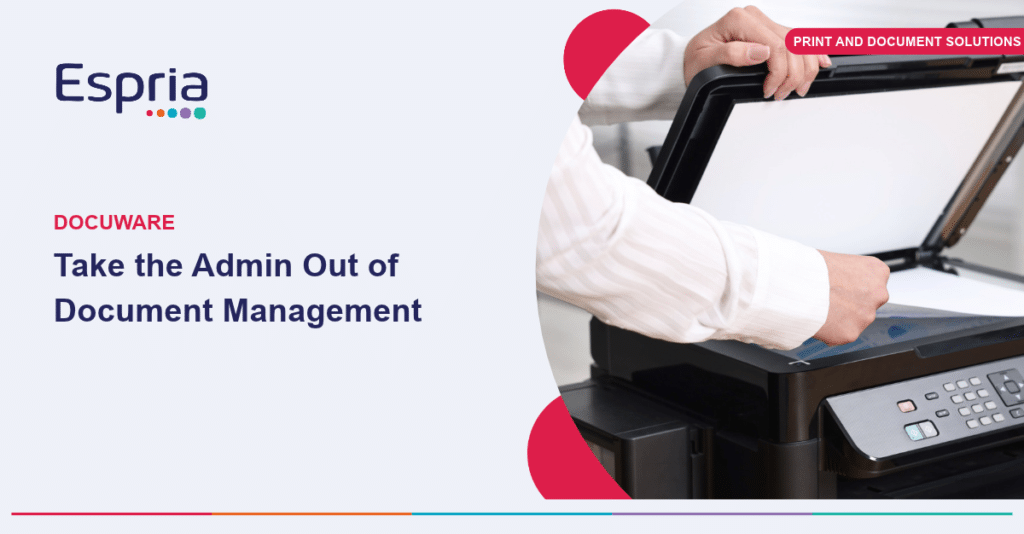
Beyond the Filing Cabinet: What Document Management Actually Saves You
Document Management for Small Offices with DocuWare For many small offices, document management still means a filing cabinet, a shared drive with inconsistent folder names, and a lot of time spent searching for the one contract or invoice somebody needs right now. DocuWare replaces that with a structured, searchable system that sits behind your everyday paperwork. What does DocuWare mean in practice? Giving Office Managers time back For an Office Manager who is often the person holding the whole administrative process together, this is time back. Fewer interruptions to find a document for a colleague,…
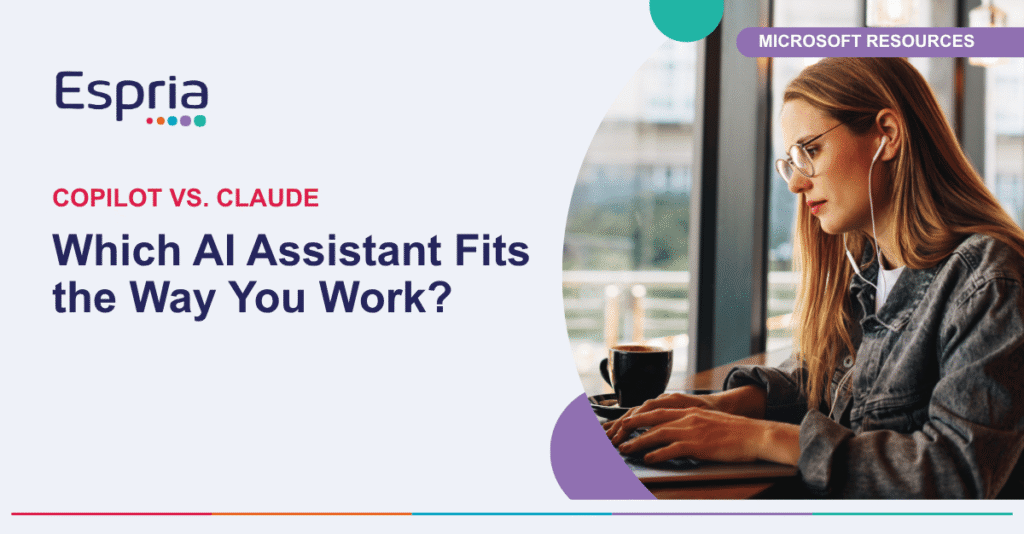
Copilot vs. Claude
Why Microsoft 365 Copilot fits every day work A plain-English guide for people trying AI at work: what Copilot does, how it differs from a separate assistant such as Claude and where to start. The short answer Claude is a separate AI workspace. Copilot sits inside the Microsoft apps many teams already use and can work with the emails, files and meetings each person is allowed to access. A separate assistant helps when: Copilot helps when: – You need help creating or developing content from scratch. – The task is focused research, reasoning or code….
Microsoft is changing Copilot billing. Here’s how to stay in control of AI costs
From 1 December 2026, new Microsoft 365 Copilot Business purchases through CSP will come with usage-based billing already configured. At first glance, that might sound like another variable cost for IT and finance teams to manage. But it also gives businesses a practical way to access the next generation of Copilot experiences while retaining control over who can use them, how much they can spend and where that money goes. This matters because Copilot is changing. New experiences such as Copilot Cowork are designed to carry out larger, multi-step pieces of work. That creates more…

Phishing just got personal
AI-powered phishing attacks are becoming harder to detect, with increasingly sophisticated emails bypassing traditional security controls. As a result, organisations are placing greater focus on Human Risk Management, recognising employee behaviour as a measurable cybersecurity risk. SecureLearn, powered by KnowBe4 and fully managed by Espria, helps businesses reduce human risk through continuous security awareness training, phishing simulations, targeted coaching, and board-ready reporting that demonstrates improvement over time.