
Cyber insurance is the new compliance, but businesses are unprepared, says Espria

Leading technology provider warns that most UK SMEs are risking financial ruin by relying on outdated assumptions about cyber insurance.
Insurance underwriters are now acting as de facto regulators of cybersecurity, demanding verifiable proof of robust security controls. From multi-factor authentication to rigorous incident response planning, many business owners are facing denied claims and wasted premiums due to insufficient cybersecurity controls and failure to test and follow agreed-upon incident response plans. Certifications like ISO 27001, Cyber Essentials and Cyber Essentials Plus are fast becoming non-negotiable prerequisites for SMEs, as is SOC2 for larger organisations.
UK SMEs risk policy rejection and wasted premiums unless they pay more attention to cybersecurity compliance.
“Cyber insurance isn’t just paperwork or a simple ‘tick-box’ exercise,” warns Ritchie Puckey, Head of Compliance at Espria. “This dangerous assumption is leaving small businesses seriously unprepared.”
“There is a cyber insurance crisis quietly unfolding for British SMEs that most business leaders are currently underestimating. The flawed assumption is that a policy is a simple protection layer, but the reality has changed dramatically: cyber insurance is the new compliance. SMEs need to be ready to demonstrate exactly how they are managing cyber risk in the modern security landscape.”
Puckey continues, “Many SMEs lack this level of cyber maturity. We are seeing clients being refused renewals outright or hit with premium increases of up to 300% because they cannot demonstrate they are actively managing their risk. This isn’t just a theoretical problem; it’s leading to public and costly claim disputes where insurers argue that a lack of basic controls and validation that the controls have been tested invalidates the policy. The question shouldn’t be do we have the budget for it, but whether businesses can afford both the financial cost and the reputational risks of failing to prevent a cyberattack.”
“The conversation must shift from the server room to the boardroom; cybersecurity is both a financial and an operational risk that the CFO and COO must address and shouldn’t ignore. The question is no longer ‘Are we insured?’ but ‘Can we prove we are insurable?’”
Espria is advocating for a guided approach. In walking businesses through a cyber insurance readiness checklist, catered to identifying gaps, the C-suite can quickly be supported in identifying and remediating critical gaps and vulnerabilities currently being overlooked. This includes neglected system migrations, such as moving from Windows 10 to 11, implementing robust managed solutions such as (Sophos) MDR and navigating the path to certifications as the demonstrable proof demanded by underwriters.
Puckey concludes, “Implementing best-practice security posture that can be verified and certified is critical, and non-negotiable. Business leaders need a security-first, risk-savvy partner they can invest in, sometimes immediately, to ensure they are aware of where those gaps are, and the critical security upgrades that need to take place well ahead of insurance renewal. This proactive investment in security not only reduces risk but can also generate a direct return by lowering insurance costs, freeing up capital for further business investment.
“UK SMEs cannot continue treating cyber security as an afterthought. It is now a fundamental requirement for financial viability and resilience, and insurance underwriters will no longer wait for you to catch up.”
You may be interested in
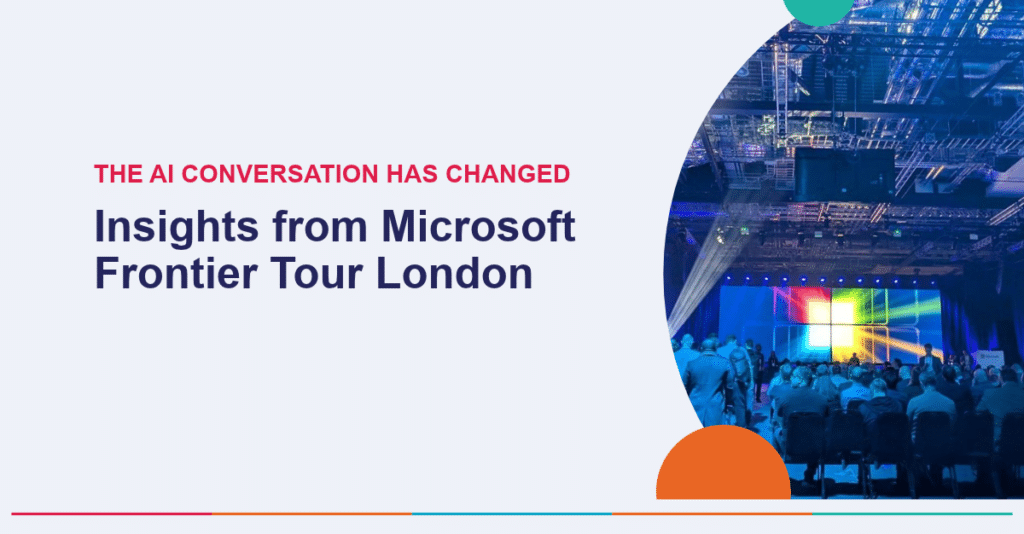
From AI Experimentation to Real Business Outcomes: Our Takeaways from Microsoft Frontier Tour London
This week, Pete Graham, Microsoft Business Manager at Espria, attended Microsoft Frontier Tour London alongside members of the wider Espria team to hear directly from Microsoft leaders, partners and customers about the future of artificial intelligence. Having attended Microsoft’s AI Tour last year, Pete was interested to see how the conversation had evolved over the past 12 months. What became clear throughout the day was that the discussion around AI has matured significantly. A year ago, many organisations were still asking what AI could do. Today, the focus is increasingly on how to adopt it…
Critical PHP vulnerabilities: do you know who owns the fix?
When websites and applications sit with different teams and suppliers, the first challenge is knowing who needs to act. Critical vulnerabilities have been disclosed affecting PHP, a technology widely used across websites, web applications and other software products. The technical advice is clear: identify affected systems and apply the available updates. But for many organisations, the first challenge is understanding where PHP is being used, who manages those systems and who is responsible for taking action. To help you identify potential exposure, we have created a PHP Security Checker to determine whether your systems have…
Beyond the Filing Cabinet: What Document Management Actually Saves You
Document Management for Small Offices with DocuWare For many small offices, document management still means a filing cabinet, a shared drive with inconsistent folder names, and a lot of time spent searching for the one contract or invoice somebody needs right now. DocuWare replaces that with a structured, searchable system that sits behind your everyday paperwork. What does DocuWare mean in practice? Giving Office Managers time back For an Office Manager who is often the person holding the whole administrative process together, this is time back. Fewer interruptions to find a document for a colleague,…
Copilot vs. Claude
Why Microsoft 365 Copilot fits every day work A plain-English guide for people trying AI at work: what Copilot does, how it differs from a separate assistant such as Claude and where to start. The short answer Claude is a separate AI workspace. Copilot sits inside the Microsoft apps many teams already use and can work with the emails, files and meetings each person is allowed to access. A separate assistant helps when: Copilot helps when: – You need help creating or developing content from scratch. – The task is focused research, reasoning or code….
Microsoft is changing Copilot billing. Here’s how to stay in control of AI costs
From 1 December 2026, new Microsoft 365 Copilot Business purchases through CSP will come with usage-based billing already configured. At first glance, that might sound like another variable cost for IT and finance teams to manage. But it also gives businesses a practical way to access the next generation of Copilot experiences while retaining control over who can use them, how much they can spend and where that money goes. This matters because Copilot is changing. New experiences such as Copilot Cowork are designed to carry out larger, multi-step pieces of work. That creates more…

Phishing just got personal
AI-powered phishing attacks are becoming harder to detect, with increasingly sophisticated emails bypassing traditional security controls. As a result, organisations are placing greater focus on Human Risk Management, recognising employee behaviour as a measurable cybersecurity risk. SecureLearn, powered by KnowBe4 and fully managed by Espria, helps businesses reduce human risk through continuous security awareness training, phishing simulations, targeted coaching, and board-ready reporting that demonstrates improvement over time.