
Businesses need to nurture their IT talent

With the unemployment level in the UK at its lowest since 1974 and pay growth still failing to keep pace with soaring inflation, organisations looking to build out their IT teams need to look internally.
Clinton Groome, COO at Espria, stated, “For businesses large and small, organisations looking to bolster their IT teams, need to look within the organisation first to ensure that it is offering the most attractive careers.”
Compounding this problem is a very clear digital skills gap. A recent survey of 5,000 UK workers – Nature of the UK’s Digital Skills Gap report – clearly identified that the lack of digital skills is hurting the economy in general, and businesses in particular.
The report found that around 22% of employees admitted a lack of digital skills was impacting their ability to hit targets and more than half (58%) said they had received no digital training from their employers.
“This means that organisations are facing a real double whammy – lack of IT talent for hire and lack of skills amongst the existing workforce,” continued Groome.
“The goal must be – as we enter a new year full of economic uncertainty – that all businesses need to nurture their homegrown talent. IT staff need to be allowed a healthy work/life balance and feel supported in managing external stress factors. For a business to retain its key employees, they really need to demonstrate they value their employees.”

“To confirm these ideas, two recent surveys from McKinsey indicate that 87% of companies feel inadequately prepared to address the skill gap, and the majority (61%) of HR professionals believe hiring developers will be their biggest challenge in 2023,” added Groome.
Studies show that one of the greatest tools to increase engagement is a comprehensive onboarding process. But providing a great candidate experience from the moment they receive the offer of employment, can be costly and time-consuming.
Helen O’Hanlon, HR Director at Espria stated: “My advice is to provide a great candidate experience from the moment an offer of employment is extended. This will inevitably become an important aspect of attracting and retaining top talent and includes everything from the initial job posting and application process, to the offer itself and onboarding. It is a way to show candidates they are valued and that the company is committed to their success.”

“While striving to provide this type of experience is admirable, it can also be costly and time-consuming. It may require additional resources and effort to ensure that every touchpoint is smooth and seamless for candidates. This can include creating detailed job descriptions, updating the application process to make it more user-friendly, providing thorough onboarding materials and training, and offering ongoing support and development opportunities for new hires. While it may require a significant investment of time and resources, providing a great candidate experience is worth it in the long run. Not only does it help to attract and retain top talent, but it also has the potential to improve employee satisfaction and productivity, leading to a positive impact on the company’s overall success.”
O’Hanlon added, “The results of low engagement, such as increased staff turnover, low productivity and poor performance can all be hugely costly to the bottom line of any organisation. But there is an alternative – nurturing talent positively impacts company culture, growth and commercial success through creating an engaged and committed workforce.”
You may be interested in
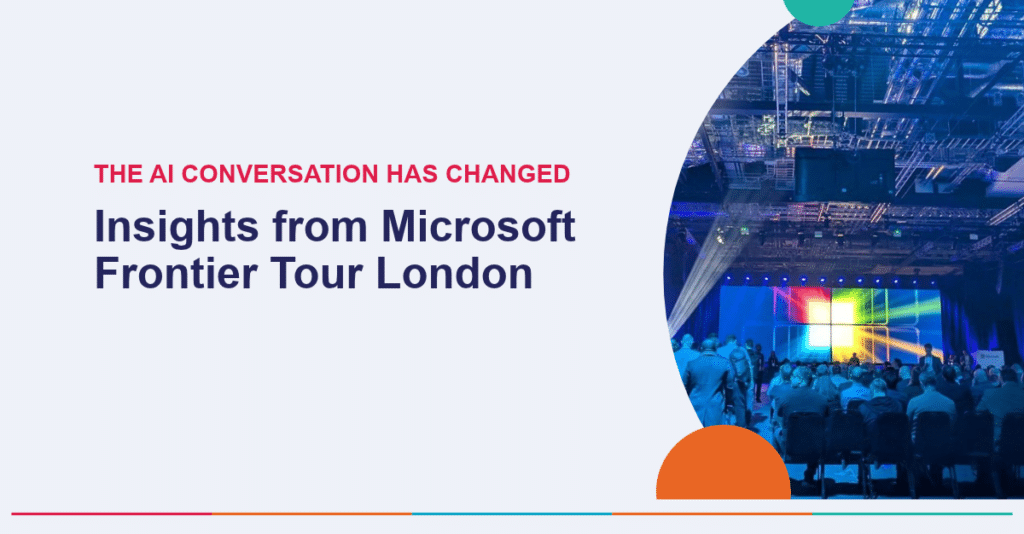
From AI Experimentation to Real Business Outcomes: Our Takeaways from Microsoft Frontier Tour London
This week, Pete Graham, Microsoft Business Manager at Espria, attended Microsoft Frontier Tour London alongside members of the wider Espria team to hear directly from Microsoft leaders, partners and customers about the future of artificial intelligence. Having attended Microsoft’s AI Tour last year, Pete was interested to see how the conversation had evolved over the past 12 months. What became clear throughout the day was that the discussion around AI has matured significantly. A year ago, many organisations were still asking what AI could do. Today, the focus is increasingly on how to adopt it…
Critical PHP vulnerabilities: do you know who owns the fix?
When websites and applications sit with different teams and suppliers, the first challenge is knowing who needs to act. Critical vulnerabilities have been disclosed affecting PHP, a technology widely used across websites, web applications and other software products. The technical advice is clear: identify affected systems and apply the available updates. But for many organisations, the first challenge is understanding where PHP is being used, who manages those systems and who is responsible for taking action. To help you identify potential exposure, we have created a PHP Security Checker to determine whether your systems have…
Beyond the Filing Cabinet: What Document Management Actually Saves You
Document Management for Small Offices with DocuWare For many small offices, document management still means a filing cabinet, a shared drive with inconsistent folder names, and a lot of time spent searching for the one contract or invoice somebody needs right now. DocuWare replaces that with a structured, searchable system that sits behind your everyday paperwork. What does DocuWare mean in practice? Giving Office Managers time back For an Office Manager who is often the person holding the whole administrative process together, this is time back. Fewer interruptions to find a document for a colleague,…
Copilot vs. Claude
Why Microsoft 365 Copilot fits every day work A plain-English guide for people trying AI at work: what Copilot does, how it differs from a separate assistant such as Claude and where to start. The short answer Claude is a separate AI workspace. Copilot sits inside the Microsoft apps many teams already use and can work with the emails, files and meetings each person is allowed to access. A separate assistant helps when: Copilot helps when: – You need help creating or developing content from scratch. – The task is focused research, reasoning or code….
Microsoft is changing Copilot billing. Here’s how to stay in control of AI costs
From 1 December 2026, new Microsoft 365 Copilot Business purchases through CSP will come with usage-based billing already configured. At first glance, that might sound like another variable cost for IT and finance teams to manage. But it also gives businesses a practical way to access the next generation of Copilot experiences while retaining control over who can use them, how much they can spend and where that money goes. This matters because Copilot is changing. New experiences such as Copilot Cowork are designed to carry out larger, multi-step pieces of work. That creates more…

Phishing just got personal
AI-powered phishing attacks are becoming harder to detect, with increasingly sophisticated emails bypassing traditional security controls. As a result, organisations are placing greater focus on Human Risk Management, recognising employee behaviour as a measurable cybersecurity risk. SecureLearn, powered by KnowBe4 and fully managed by Espria, helps businesses reduce human risk through continuous security awareness training, phishing simulations, targeted coaching, and board-ready reporting that demonstrates improvement over time.