
Why Cyber Security needs to be at the forefront of your business operations.

There has been so much disruption for businesses as a result of the pandemic, so business leaders have rightly been focused on crisis management and steering their way through to recovery in their markets.
As we climatise back to some resemblance of normality, businesses are focusing on their operations, however this has resulted in a key area of consideration being overlooked; protection of data, assets and reputation whilst you establish the way your teams are now working.
Some businesses may be considering allowing their teams to work fully remotely with no return to the office, or more likely, you may be supporting a combination of working from home and in the office, allowing a ‘hybrid’ work pattern. This means that considering your businesses cyber security will be even more important and form an integral part of the plan in your overall operations.
Cyber Security should be at the core of all your business planning for a post-pandemic team. Many companies have come to realise the importance of providing a secure and safe environment and now many are realising how their teams are compromised on their home networks which are capable of malicious attacks remotely.
These concerns in Cyber security are well founded. Forbes noted recently that 88% of companies across the world, had experienced phishing attempts in 2019 and 68% of leaders feel that Cyber Security risks are on the increase. So, there are critical considerations that business leaders have for a post pandemic world.
The working world is now hybrid
Hybrid working is now a flexible working arrangement where employees are given the freedom to be in the office or working from home. However, this widely recognised change in the working environment accentuates the technology pitfalls within your business. So, whilst you may have had to consider the systems your teams are using, Cyber Security concerns should be at the core of all of this change.
A flexible, hybrid team adds complexities into the intricacies to your IT operations. Your data is vulnerable as your teams move between private home and office networks. So, if you IT solutions are outdated and your IT policies weak, then your business is already compromised.
Creating a secure hybrid workforce
It is imperative that your business now has to consider the implications to your cyber security so that you can protect your IT infrastructure. There is not one way to do this-your business is unique, so every business needs to reflect on your individual requirements and gaps in your IT policies and cyber solutions. However, there are some key things that you can implement immediately when building your cyber security plans:
Implement ID-management strategies:
Hybrid working creates greater issues for IT teams as your teams use their personal networks to connect to work related resources and use various digital tools to work. Some of this is impossible for your IT teams to manage which exposes many entry points for unauthorised users and security threats. Therefore, consider implementing Identity- management strategies to ensure that your teams can work within your business perimeters so that wherever they work, they are protected and secure from cyber attacks at all times
Do you have VPN?
A Virtual Private Network encrypt all the user’s data and is an imperative solution for your home working teams. VPN essentially creates a data tunnel from your office location to your employee’s location wherever they are and is the most practical solution to address any of your business cyber security concerns. This means your teams can access data in your office and retrieve it at home in a secure way without any compromise in security.
Promote Cyber Security in your business
To minimise risk in your data in a hybrid working environment, you should consider promoting a culture within your business, where your teams place cyber security at the forefront. Providing training raises awareness and reinforces your policy. Ultimately every level of job needs to consider security in the context of how, where and when their businesses operate. Especially as customers are demanding seamless interactions, you need to install frameworks that establish robust protection and cyber security principles within your teams.
Do you need support in establishing the cyber security policies you need to implement? Then Contact Mode today for a free consultation.
Forbes noted recently that 88% of companies across the world, had experienced phishing attempts in 2019 and 68% of leaders feel that Cyber Security risks are on the increase.
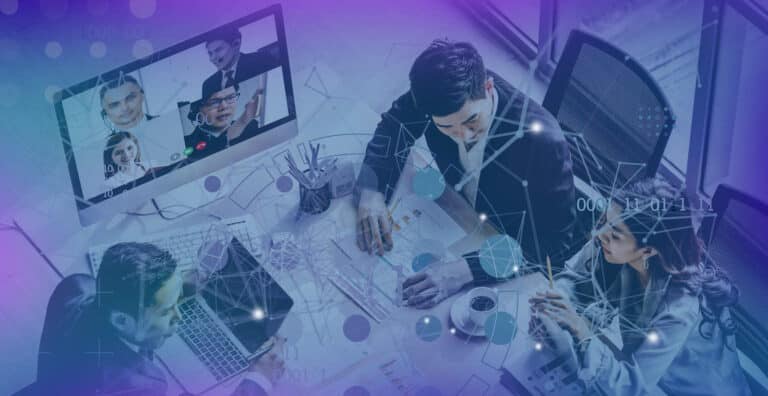
The working world is now hybrid
Hybrid working is now a flexible working arrangement where employees are given the freedom to be in the office or working from home. However, this widely recognised change in the working environment accentuates the technology pitfalls within your business. So, whilst you may have had to consider the systems your teams are using, Cyber Security concerns should be at the core of all of this change.
A flexible, hybrid team adds complexities into the intricacies to your IT operations. Your data is vulnerable as your teams move between private home and office networks. So, if you IT solutions are outdated and your IT policies weak, then your business is already compromised.
Creating a secure hybrid workforce
It is imperative that your business now has to consider the implications to your cyber security so that you can protect your IT infrastructure. There is not one way to do this-your business is unique, so every business needs to reflect on your individual requirements and gaps in your IT policies and cyber solutions. However, there are some key things that you can implement immediately when building your cyber security plans:
Implement ID-management strategies:
Hybrid working creates greater issues for IT teams as your teams use their personal networks to connect to work related resources and use various digital tools to work. Some of this is impossible for your IT teams to manage which exposes many entry points for unauthorised users and security threats. Therefore, consider implementing Identity- management strategies to ensure that your teams can work within your business perimeters so that wherever they work, they are protected and secure from cyber attacks at all times
Do you have VPN?
A Virtual Private Network encrypt all the user’s data and is an imperative solution for your home working teams. VPN essentially creates a data tunnel from your office location to your employee’s location wherever they are and is the most practical solution to address any of your business cyber security concerns. This means your teams can access data in your office and retrieve it at home in a secure way without any compromise in security.
Promote Cyber Security in your business
To minimise risk in your data in a hybrid working environment, you should consider promoting a culture within your business, where your teams place cyber security at the forefront. Providing training raises awareness and reinforces your policy. Ultimately every level of job needs to consider security in the context of how, where and when their businesses operate. Especially as customers are demanding seamless interactions, you need to install frameworks that establish robust protection and cyber security principles within your teams.
Do you need support in establishing the cyber security policies you need to implement? Then Contact Mode today for a free consultation.
Forbes noted recently that 88% of companies across the world, had experienced phishing attempts in 2019 and 68% of leaders feel that Cyber Security risks are on the increase.
You may be interested in
From AI Experimentation to Real Business Outcomes: Our Takeaways from Microsoft Frontier Tour London
This week, Pete Graham, Microsoft Business Manager at Espria, attended Microsoft Frontier Tour London alongside members of the wider Espria team to hear directly from Microsoft leaders, partners and customers about the future of artificial intelligence. Having attended Microsoft’s AI Tour last year, Pete was interested to see how the conversation had evolved over the past 12 months. What became clear throughout the day was that the discussion around AI has matured significantly. A year ago, many organisations were still asking what AI could do. Today, the focus is increasingly on how to adopt it…
Critical PHP vulnerabilities: do you know who owns the fix?
When websites and applications sit with different teams and suppliers, the first challenge is knowing who needs to act. Critical vulnerabilities have been disclosed affecting PHP, a technology widely used across websites, web applications and other software products. The technical advice is clear: identify affected systems and apply the available updates. But for many organisations, the first challenge is understanding where PHP is being used, who manages those systems and who is responsible for taking action. To help you identify potential exposure, we have created a PHP Security Checker to determine whether your systems have…
Beyond the Filing Cabinet: What Document Management Actually Saves You
Document Management for Small Offices with DocuWare For many small offices, document management still means a filing cabinet, a shared drive with inconsistent folder names, and a lot of time spent searching for the one contract or invoice somebody needs right now. DocuWare replaces that with a structured, searchable system that sits behind your everyday paperwork. What does DocuWare mean in practice? Giving Office Managers time back For an Office Manager who is often the person holding the whole administrative process together, this is time back. Fewer interruptions to find a document for a colleague,…
Copilot vs. Claude
Why Microsoft 365 Copilot fits every day work A plain-English guide for people trying AI at work: what Copilot does, how it differs from a separate assistant such as Claude and where to start. The short answer Claude is a separate AI workspace. Copilot sits inside the Microsoft apps many teams already use and can work with the emails, files and meetings each person is allowed to access. A separate assistant helps when: Copilot helps when: – You need help creating or developing content from scratch. – The task is focused research, reasoning or code….
Microsoft is changing Copilot billing. Here’s how to stay in control of AI costs
From 1 December 2026, new Microsoft 365 Copilot Business purchases through CSP will come with usage-based billing already configured. At first glance, that might sound like another variable cost for IT and finance teams to manage. But it also gives businesses a practical way to access the next generation of Copilot experiences while retaining control over who can use them, how much they can spend and where that money goes. This matters because Copilot is changing. New experiences such as Copilot Cowork are designed to carry out larger, multi-step pieces of work. That creates more…

Phishing just got personal
AI-powered phishing attacks are becoming harder to detect, with increasingly sophisticated emails bypassing traditional security controls. As a result, organisations are placing greater focus on Human Risk Management, recognising employee behaviour as a measurable cybersecurity risk. SecureLearn, powered by KnowBe4 and fully managed by Espria, helps businesses reduce human risk through continuous security awareness training, phishing simulations, targeted coaching, and board-ready reporting that demonstrates improvement over time.