
Now is the time for offices and remote workers to wake up to secure printing
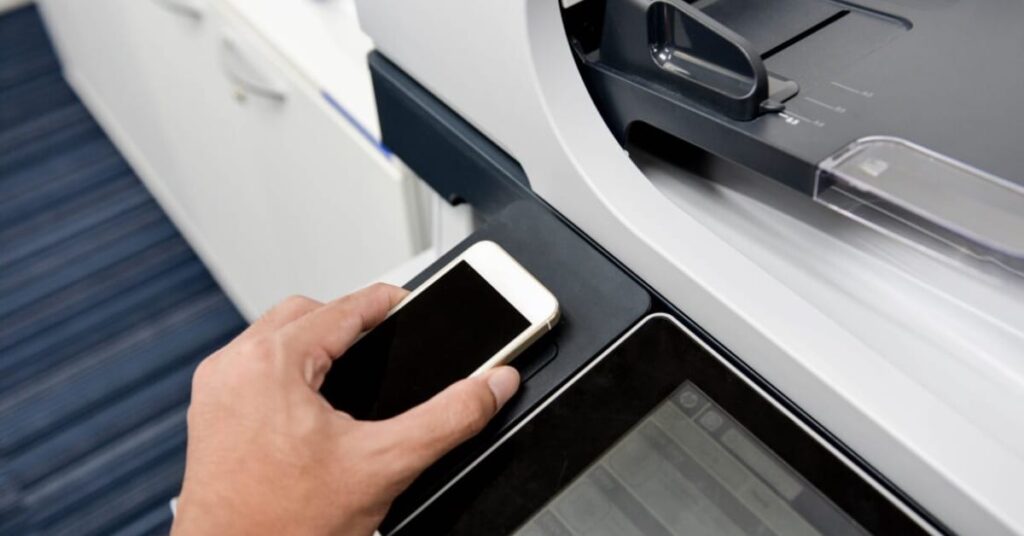
Cyber security has become an increasing concern for businesses over the years, but even more so since digital transformation has accelerated, leading to many employees working remotely on a more permanent basis. As work now takes place in a multitude of locations, (be it in the office, at home or in other remote locations) cyber-attacks have been refined and have increased in their number and frequency. Often, according to Managed Services provider Espria, the risks associated with this rise can be forgotten or ignored putting many businesses at risk. Dave Adamson, CTO at Espria, stated, “Technology that enables secure printing is essential, particularly in the post-pandemic world. An office printer will not only scan or copy but can transmit valuable data and if you use a multifunctional device (an MFD), with greater capabilities and functions, it is already supporting your business with improved efficiency and productivity, but it is also an additional risk.

“A notable cyber-attack occurred when 150,000 printers were hacked by Stackoverflowin. Thankfully, this was just for fun, but the aim was to highlight how vulnerable printers connected to the internet are. This experiment clearly indicated how easy it is for a cyber-attack to occur through our printers. Moreover, once access is secured, the potential for destruction is huge – from accessing the data stored on your printer to DDoS (distributed denial-of-service).” Another security concern are the paper documents left on your printers by your own staff. It’s all too easy to send something to print and then not pick it up – these documents can be intercepted by hackers who have gained access to your office. Therefore, you need to secure your printing environment to ensure your documents and sensitive data are protected. Adamson continued, “According to Quocirca’s latest Global Print Security Landscape report 2022 68% of businesses in the United Kingdom, United States, France, and Germany suffered a print-related data breach in the last year, which resulted in a data loss that cost companies an average of more than £600,000.” Secure printing is a set of specific standards that prevents unauthorised access to your printing environment either through the network or your devices. These tools and software protect access levels and restrict printing access to only those with permission to use them. Espria believes there are several key security measures you should implement to ensure you are printing securely:
- Follow Me Printing: This application enables any prints to be held in a queue until the author releases the print job securely at a device of their choice.
- Two-factor authentication: Adding another layer of security, via two-factor authentication whereby a pin is inserted at the device to release the printout.
- Implementation of Print Logging and Audit Trails: Obtain visibility of who is printing what, where and when so that you can monitor your printing security.
- Data encryption: Encoding of your documents and only those with the correct authorisation can decode the information. MFDs can encrypt files stored on their hard drive meaning that should it be stolen, your data remains safe. Also, with encryption or at least password protection, your sensitive data remains safe from being viewed by the wrong people.
. Adamson continued, “Whether you have a printer or a multifunctional device (MFD), consider how many files are copied, printed, and scanned throughout your working week. Clearly, there is a huge amount of your business data being stored on your device, much of which is highly confidential to your business.” “If you have secure print software, you can create alerts to notify you of a leak or data breach from one of your network printers. This provides your business with full transparency and accountability of your document workflows,” continued Adamson. “Unprotected printers and copiers can provide a relatively straightforward way for unauthorised parties to gain access to an organisation’s data. Ensuring devices are fully secure should be a key concern for any business and IT manager. “To improve security across your workplace, start by completing a comprehensive assessment of all your printers and MFDs – both siloed and networked devices – and identify any potential weak access points. Then approach a trusted print management specialist to help build an improved system,” concluded Adamson.
You may be interested in

Phishing just got personal
AI-powered phishing attacks are becoming harder to detect, with increasingly sophisticated emails bypassing traditional security controls. As a result, organisations are placing greater focus on Human Risk Management, recognising employee behaviour as a measurable cybersecurity risk. SecureLearn, powered by KnowBe4 and fully managed by Espria, helps businesses reduce human risk through continuous security awareness training, phishing simulations, targeted coaching, and board-ready reporting that demonstrates improvement over time.

The Hidden Environmental Cost of Office Printing
Most offices know that reducing paper is good for the environment, but few have visibility over what their printing actually costs in resources: energy, paper, and consumables. A managed print service brings sustainable office printing into focus by measuring what is actually happening, rather than estimating it. Every printer left on standby overnight, every unnecessary colour print, and every cartridge thrown away with usable toner left inside adds up. For a business printing several thousand pages a month, the difference between an efficient and inefficient setup can be significant, both in cost and in environmental…

Is Your Office Printer a Way In for Cybercriminals?
Most small businesses think of cyber security as a laptop problem, a server problem, or an email problem. The office printer rarely gets a mention, yet it is connected to your network, holds a hard drive, and processes some of the most sensitive documents in the business, from invoices to HR letters and client contracts. However, it is important to realise that office printer vulnerabilities can be exploited by cybercriminals, potentially leading to cyber attacks. A modern multifunction printer is a computer. It has an operating system, a network connection, often Wi-Fi, and increasingly a…

The Cyber Resilience Act: what it means for your business
By Stephen Cook From 11th September 2026, a new EU regulation starts changing how connected products and software are built, sold and supported – and UK businesses trading into Europe are firmly in scope [1] [2]. Here is what the Cyber Resilience Act actually requires, why it matters beyond the compliance paperwork, and how Espria helps clients meet it. What is the Cyber Resilience Act? The Cyber Resilience Act (CRA) is an EU regulation – Regulation (EU) 2024/2847 – that sets mandatory cybersecurity requirements for “products with digital elements.” In practice, this covers hardware and software that can connect to a device or network: IoT devices,…

The Hidden Costs of Printing: How Managed Print Services Reduce Business Waste
Introduction For many organisations, printing is viewed as a routine operational expense. Printers are purchased, toner is replaced when needed, and documents continue to flow through the business without much scrutiny. However, the true cost of printing extends far beyond paper and ink. Unmanaged print environments often create hidden expenses through inefficient device usage, excessive energy consumption, IT support demands, security risks, and employee downtime. These costs can accumulate significantly over time, impacting productivity and profitability. This is particularly relevant as businesses seek to optimise operations, reduce waste, and improve sustainability while controlling expenditure. Whether…

Can Your Business Actually Recover? The Operational Resilience Question Most SMEs Cannot Answer
Operational resilience is not a technology problem. It is a business problem. And until boards and leadership teams own it, no amount of IT investment will be enough. The Gap Between Confidence and Reality Most organisations believe they are more resilient than they are. The backups are running. The antivirus is licensed. The IT team knows what they are doing. That confidence, in our experience, rarely survives first contact with an actual incident. The question is not whether your systems are protected. The question is whether your business can keep delivering its most important services…