
Are cloud telecommunications secure?

Technology has been rapidly changing in recent years and businesses have been increasingly relying on the Cloud to support their processes with 80% of the budget committed to Cloud Services because of the flexibility and scalability it provides compared to in-house equipment.
However, how secure is your telecommunications if it is hosted in the cloud? Obviously there are concerns over Cloud Telecommunications as your businesses calls and messages are all passed through your Cloud Service providers data centres and you do not want hackers do have the capability in any way of being able to access any of your sensitive data! McAfee conduct a Cloud Security Survey every year, surveying 1,400 IT decision makers to identify their security issues. This year’s survey revealed some interesting facts: 97% rely on Cloud Technology 88% are storing sensitive data in the Cloud Cloud Telecommunications is a robust way to run your communications because it provides: Encryption: All data and calls are encrypted with Cloud technology and protected against any external threats or attacks-you can be assured your calls and messages are secure Secure data centres: All Cloud Data centres operate on the highest standards of security and ensure that they are fully up to date with security Protected from external attacks: Viruses, intrusions, and DDoS (distributed denial-of-service attacks-a process of flooding the system with so many calls that the system cannot cope!) have no chance of infiltrating your Cloud communications as the Cloud always maintains the latest protection programmes. Redundancy: All Cloud services are operated redundantly meaning your teams will always be able to access the data they need even if the data centre should fail! Are there any risks with Cloud Telecommunications? Your Cloud telecommunications provider will always ensure that these security measures are in place. However, as a business, Mode would advise that you implement an internal Data Protection Policy within your business as often security breaches occur due to human error. So, support your teams by implementing the following: Data Processed: What data is processed and what security measures are required. Get an overview of your data and define the required security level- Your telecommunications provider should be able to support you with this. What and Who Access the data: Access controls are so important in your business. Ascertain who needs access, who should have access to ensure you are as secure as possible. What are the risks in your business: Some businesses are more attractive than others to hackers? Conduct a realistic assessment of all the potential internal and external risks and test all the scenarios. Mode Communications can support your teams with Cloud Telecommunications implementation and ensure you are kept secure. Contact our team today to find out more.
Technology has been rapidly changing in recent years and businesses have been increasingly relying on the Cloud to support their processes with 80% of the budget committed to Cloud Services because of the flexibility and scalability it provides compared to in-house equipment.

You may be interested in

From AI Experimentation to Real Business Outcomes: Our Takeaways from Microsoft Frontier Tour London
This week, Pete Graham, Microsoft Business Manager at Espria, attended Microsoft Frontier Tour London alongside members of the wider Espria team to hear directly from Microsoft leaders, partners and customers about the future of artificial intelligence. Having attended Microsoft’s AI Tour last year, Pete was interested to see how the conversation had evolved over the past 12 months. What became clear throughout the day was that the discussion around AI has matured significantly. A year ago, many organisations were still asking what AI could do. Today, the focus is increasingly on how to adopt it…
Critical PHP vulnerabilities: do you know who owns the fix?
When websites and applications sit with different teams and suppliers, the first challenge is knowing who needs to act. Critical vulnerabilities have been disclosed affecting PHP, a technology widely used across websites, web applications and other software products. The technical advice is clear: identify affected systems and apply the available updates. But for many organisations, the first challenge is understanding where PHP is being used, who manages those systems and who is responsible for taking action. To help you identify potential exposure, we have created a PHP Security Checker to determine whether your systems have…
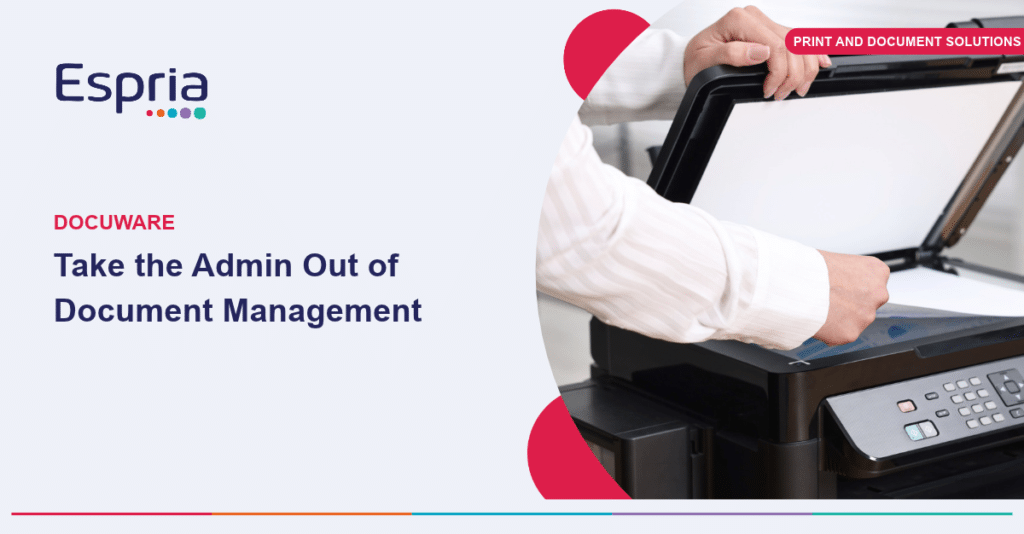
Beyond the Filing Cabinet: What Document Management Actually Saves You
Document Management for Small Offices with DocuWare For many small offices, document management still means a filing cabinet, a shared drive with inconsistent folder names, and a lot of time spent searching for the one contract or invoice somebody needs right now. DocuWare replaces that with a structured, searchable system that sits behind your everyday paperwork. What does DocuWare mean in practice? Giving Office Managers time back For an Office Manager who is often the person holding the whole administrative process together, this is time back. Fewer interruptions to find a document for a colleague,…
Copilot vs. Claude
Why Microsoft 365 Copilot fits every day work A plain-English guide for people trying AI at work: what Copilot does, how it differs from a separate assistant such as Claude and where to start. The short answer Claude is a separate AI workspace. Copilot sits inside the Microsoft apps many teams already use and can work with the emails, files and meetings each person is allowed to access. A separate assistant helps when: Copilot helps when: – You need help creating or developing content from scratch. – The task is focused research, reasoning or code….
Microsoft is changing Copilot billing. Here’s how to stay in control of AI costs
From 1 December 2026, new Microsoft 365 Copilot Business purchases through CSP will come with usage-based billing already configured. At first glance, that might sound like another variable cost for IT and finance teams to manage. But it also gives businesses a practical way to access the next generation of Copilot experiences while retaining control over who can use them, how much they can spend and where that money goes. This matters because Copilot is changing. New experiences such as Copilot Cowork are designed to carry out larger, multi-step pieces of work. That creates more…

Phishing just got personal
AI-powered phishing attacks are becoming harder to detect, with increasingly sophisticated emails bypassing traditional security controls. As a result, organisations are placing greater focus on Human Risk Management, recognising employee behaviour as a measurable cybersecurity risk. SecureLearn, powered by KnowBe4 and fully managed by Espria, helps businesses reduce human risk through continuous security awareness training, phishing simulations, targeted coaching, and board-ready reporting that demonstrates improvement over time.